A complete guide to hardwood stair installation — materials, methods, the two-tone look, what it costs, and the mistakes to avoid. Expert advice from FloorSure in Toronto.
Few home features rival the timeless elegance of a well-crafted hardwood staircase. A staircase is one of the first things a guest sees, and swapping tired carpet or worn treads for warm, solid wood transforms the whole feel of a home. But a hardwood staircase is also a precision job — it involves anatomy, materials, finishing, and safety details that are easy to get wrong. This guide covers everything a Toronto homeowner needs to know before starting.
At FloorSure, based in the GTA, we install and renovate hardwood stairs across Toronto every week. Here is how the process works, what to expect, and how to make sure your investment looks great and lasts.
Common Misconceptions About Hardwood Stairs
Homeowners often hesitate over two worries: that wood stairs will be slippery, and that they will creak. Both are solvable. Slip resistance comes from the right finish, a carpet runner, or discreet no-slip strips, and many families simply add a runner for softness and grip in high-traffic homes.
Squeaks come almost entirely from poor installation, not from the wood itself. When treads and risers are properly fastened, glued, and shimmed to the stringers, a hardwood staircase stays quiet for decades. The trick is not the material — it is the craftsmanship behind it.
Anatomy of a Hardwood Staircase
Understanding a few terms makes every quote and conversation clearer. A staircase is built from a handful of core parts, and knowing them helps you decide where to invest:
- Treads — the horizontal boards you step on; the most visible and hardest-working part.
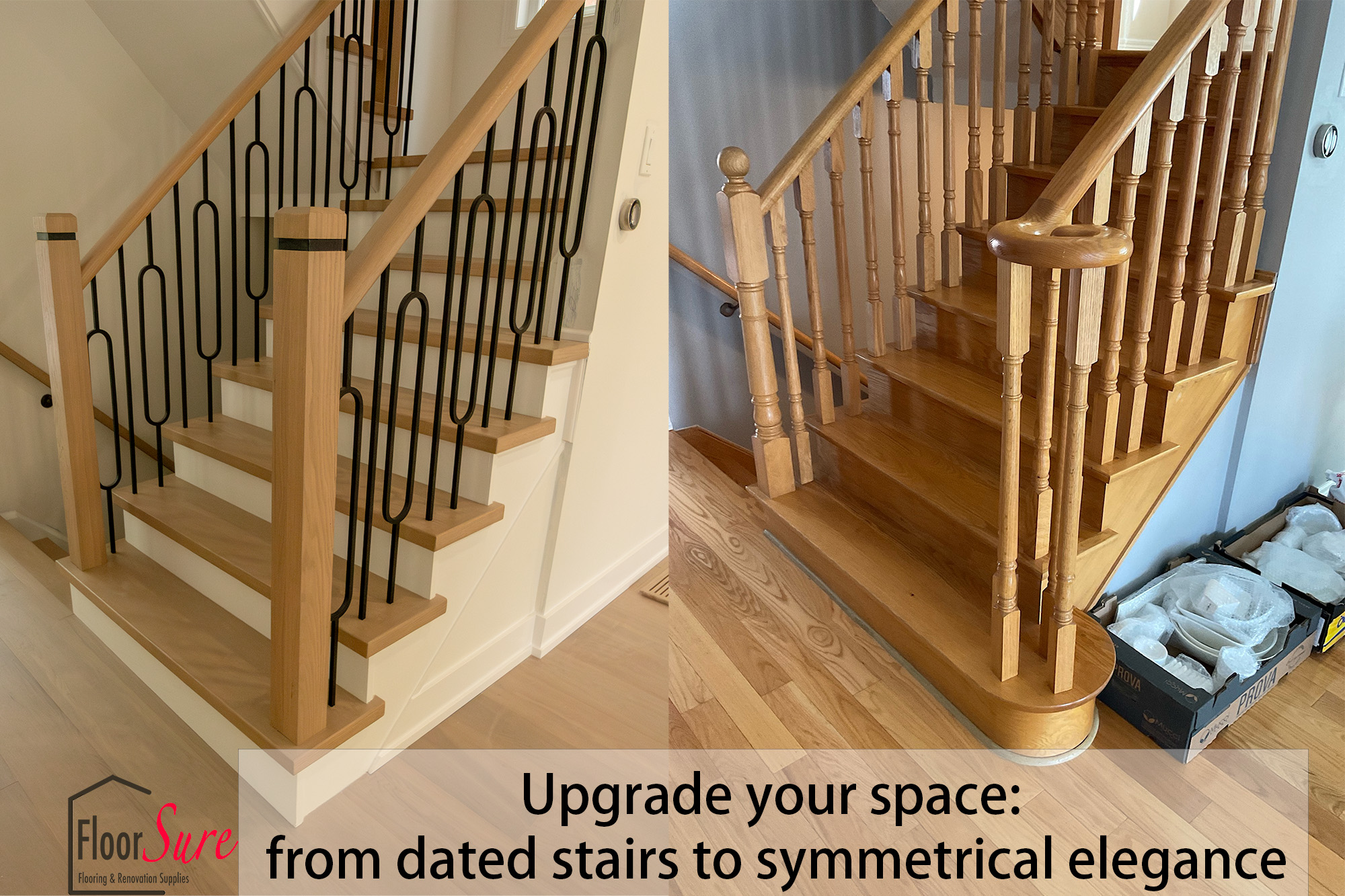
- Risers — the vertical faces between treads, often painted white for a two-tone look.
- Stringers — the angled structural boards that carry the whole staircase.
- Handrail — the rail you grip, mounted to the wall or the spindles.
- Spindles (balusters) — the vertical posts supporting the handrail; wood or wrought iron.
- Newel posts — the sturdy anchor posts at the top and bottom of the run.
Most cosmetic upgrades focus on treads, risers, and the railing system, while the stringers stay in place unless there is a structural issue.
Choosing Your Wood and Finish
Species and finish decide both the look and the longevity of your stairs. Red and white oak are the most popular choices in the GTA because they are hard, widely available, and take stain beautifully. Maple offers a smoother, more contemporary grain, while hickory brings extra hardness and character for busy households.
Just as important is matching your stairs to your existing floor. When people want a seamless flow between the hallway and the staircase, we colour-match the stain — often mixing a custom colour so the treads read as one continuous surface with the floor. Site-finished stairs are sanded and finished in place for the tightest match, and they need curing time between coats, which affects the schedule more than the price. For homeowners planning new floors at the same time, our hardwood flooring service coordinates both so everything matches.
The Installation Process, Step by Step
A professional hardwood stair installation follows a clear sequence, and understanding it helps you know what a quality job looks like. It starts with removing the old surface — carpet, staples, and tack strips, or the old treads if you are rebuilding.
Next, each tread and riser is measured and cut individually, because no two steps are ever exactly identical, especially in older Toronto homes. The pieces are then glued and fastened to the stringers with construction adhesive and finish nails, and any gaps are shimmed to eliminate movement. Finally, the stairs are sanded, stained, and sealed — or pre-finished pieces are set — and the railing and spindles are fitted. Rushing any of these steps is where squeaks, gaps, and mismatched colour come from.
What Hardwood Stair Installation Costs in Toronto
Pricing depends on whether you are refinishing existing treads or building new ones, the number of steps, and how much railing and custom stain work is involved. Refinishing is the more budget-friendly route; a full carpet-to-hardwood conversion with new treads, risers, and a rebuilt railing sits at the higher end. Curved or winder stairs cost more because each piece is shaped and fitted individually.
Because every staircase differs in step count, layout, and condition, prices vary by area and scope, and the only accurate number comes from an on-site look. For a detailed breakdown of ranges and the factors that move them, see our guide to staircase renovation cost in Toronto. To weigh your options, our comparison of refinishing vs. replacing hardwood stairs explains which route fits which staircase.
Why Professional Installation Matters
Stairs are the one surface in your home you use with your full body weight, dozens of times a day, so safety and precision are not optional. A professional install means treads that are level and secure, consistent riser heights that meet code, a solid railing, and a finish that wears evenly. These are exactly the details that keep a staircase quiet, safe, and beautiful for the long run.
There is also real value in hiring an insured, accountable installer. FloorSure is fully insured and WSIB-covered, and every staircase we install carries a 1-year workmanship warranty — so you are protected, and the result is built to last. You can see finished examples and the full scope on our staircase renovation service page, or browse recent staircase renovation projects in Toronto.
Frequently Asked Questions
How long does hardwood stair installation take? Most straight staircases take two to four days, depending on whether you are refinishing or rebuilding, the step count, and railing work. Site-finished stairs need extra time for the stain and sealer to cure between coats.
Are hardwood stairs slippery? They can be smoother than carpet, but the right finish, a runner, or discreet no-slip strips solve it easily. Many Toronto families add a runner in high-traffic homes for both grip and softness.
Can I match my stairs to my existing floor? Yes. We colour-match the stain — often custom-mixing a shade — and site-finish the treads so the staircase and floor read as one continuous surface.
Should I refinish or replace my hardwood stairs? If the treads are structurally sound and you like the layout, refinishing gives a big lift for less. If the stairs are carpeted, worn, or you want a new look, rebuilding is the better long-term value — our refinishing-vs-replacing guide walks through both.
Do hardwood stairs add value to a home? Yes. A polished hardwood staircase is a high-impact upgrade that improves the look of the whole home and appeals strongly to buyers, making it a worthwhile investment for resale.
Ready to Transform Your Staircase?
A hardwood staircase is one of the most visible, high-impact upgrades you can make — warmer, quieter, safer, and tied seamlessly into the rest of your home. The right result comes down to good materials, careful colour matching, and precise installation. Explore our staircase renovation service, see real staircase projects in Toronto, and plan matching floors with our hardwood flooring service. FloorSure is a fully insured, WSIB-covered flooring and stair installer serving Toronto and the GTA, with a 1-year workmanship warranty — call or WhatsApp +1 (437) 988-0524 to book a free on-site consultation.
FloorSure is a fully insured, WSIB-covered flooring & stair installer serving Toronto & the GTA, with a 1-year workmanship warranty on every installation. Call or WhatsApp +1 (437) 988-0524 for a free on-site quote.