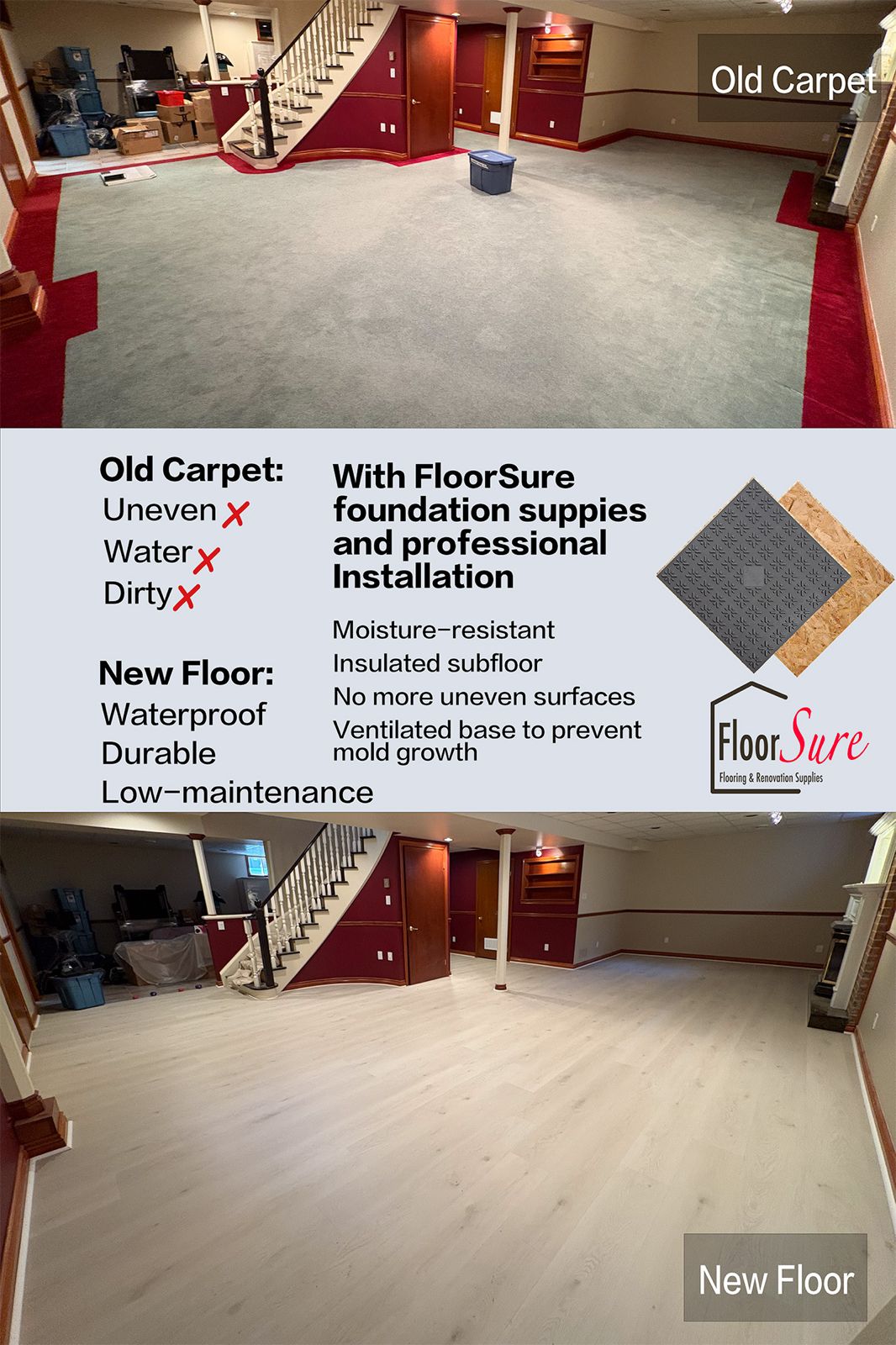
The best basement flooring balances moisture resistance, warmth, and durability. Here is how Toronto homeowners choose the right material and subfloor system for a below-grade space.
A finished basement adds real, usable space to a Toronto home — a family room, a home office, a gym, or a rental suite. But the basement is also the most demanding room in the house for flooring. It sits below grade, against cool concrete, and is exposed to humidity that the upper floors never see. Choosing the right floor here is less about looks alone and more about how the material handles moisture, temperature, and time.
This guide walks through what makes a basement different, which flooring types hold up best, and how the subfloor beneath your finished surface quietly decides whether your investment lasts.
Why Basements Need Different Flooring
Concrete slabs are porous, and they wick moisture up from the ground through a process called vapour transmission. Even a dry-looking basement floor can release enough humidity over a year to warp, cup, or grow mould under the wrong material. This is why flooring that performs beautifully on your main floor can fail below grade.
Basements also stay cooler and can swing in humidity between seasons, especially in the GTA's humid summers and dry, heated winters. The ideal basement floor resists water, tolerates temperature change, feels comfortable underfoot, and is easy to clean. Getting all four is possible — but it starts with matching the material to the conditions, not the other way around.
Top Basement Flooring Options Compared
Not every floor belongs in a basement. Here are the options we recommend most often for below-grade spaces, and where each one fits:
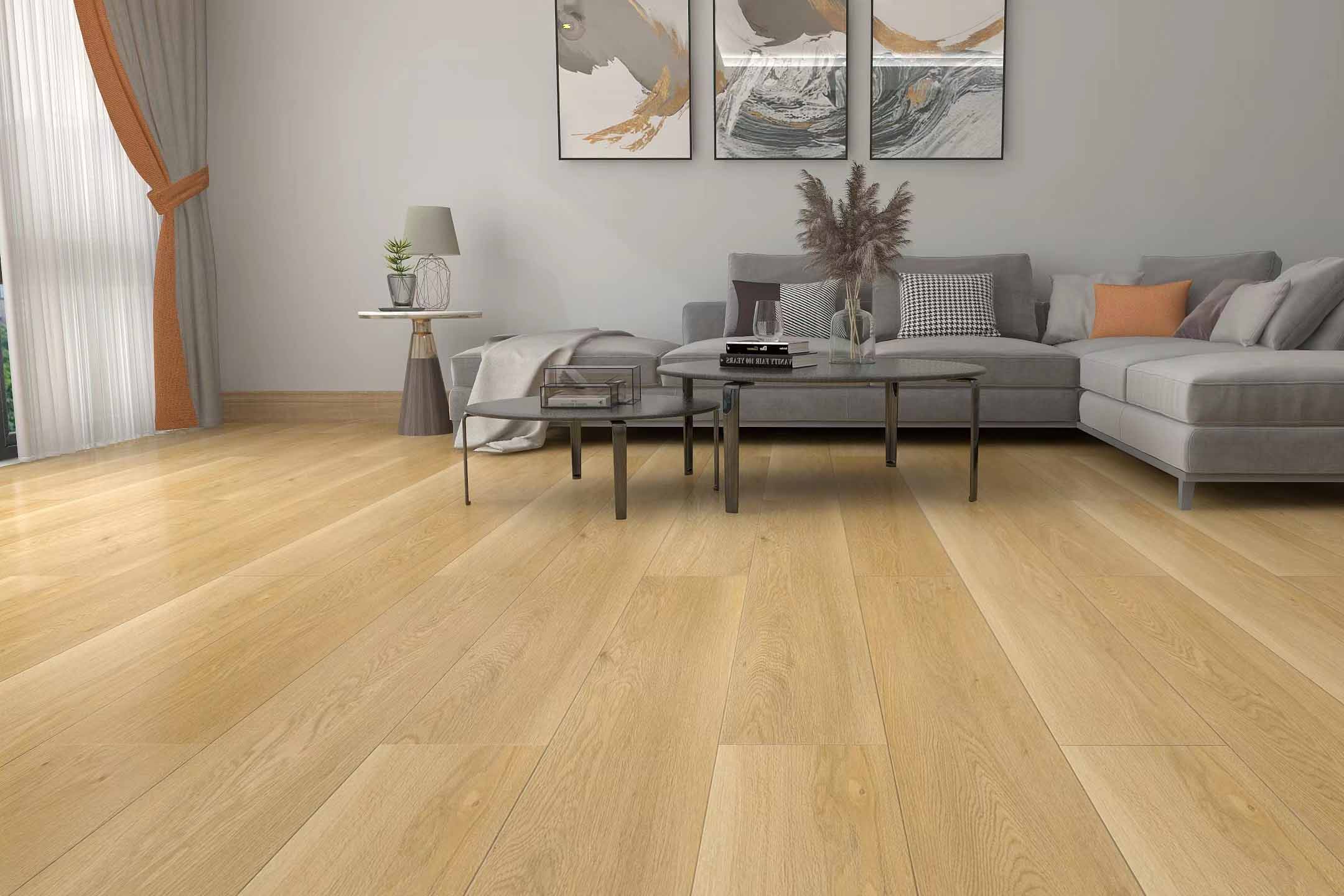
- SPC (stone plastic composite) vinyl — Our most-recommended basement floor. Its rigid, 100% waterproof core shrugs off spills and slab humidity, installs as a floating floor over concrete, and comes in convincing wood and stone looks. It is the safest all-round choice for GTA basements.
- Luxury vinyl plank (LVP) — Also waterproof and comfortable underfoot, with a slightly softer feel than SPC. A strong pick for family rooms and play areas.
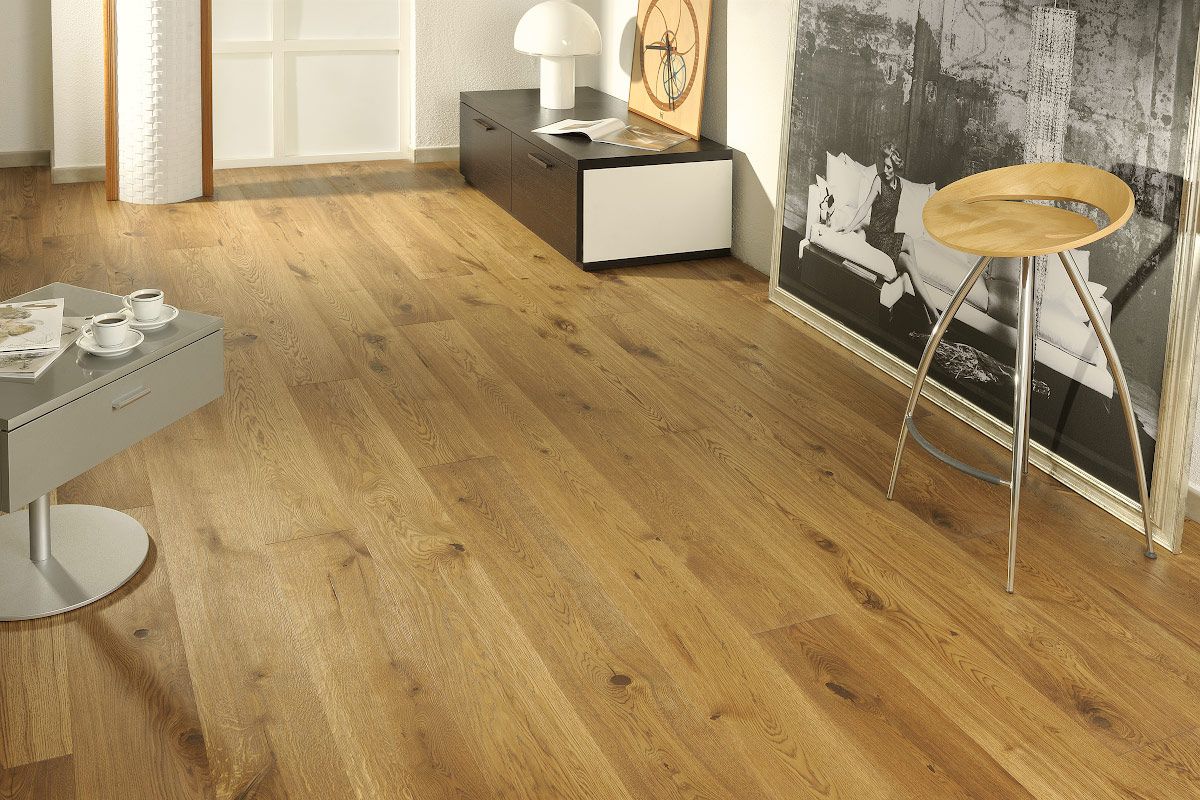
- Engineered hardwood — Possible in a dry, well-controlled basement with proper moisture testing and the right subfloor, but riskier than vinyl. Solid hardwood is not recommended below grade because it expands and contracts with humidity.
- Tile — Fully waterproof and durable, though hard and cold underfoot without in-floor heating. Best for bathrooms and laundry zones rather than living areas.
- Carpet — Cozy, but it can trap moisture and harbour mould in a damp basement, so it is only advisable over a proper moisture-managed subfloor.
For most Toronto basements, a waterproof rigid vinyl like SPC flooring delivers the best balance of durability, comfort, and peace of mind. If you have your heart set on real wood and your basement is genuinely dry, our hardwood flooring team can assess whether an engineered product is a safe fit.
Why SPC Vinyl Is the Go-To Choice
SPC has become the default recommendation for below-grade flooring, and for good reason. Its dense mineral core does not swell when it meets moisture, so an occasional spill or a bit of slab humidity will not ruin it. The wear layer on top resists scratches from furniture, pets, and foot traffic, which matters in a hard-working basement.
It also installs as a floating floor with a click-lock system, so it sits over concrete without glue and can be lifted if you ever need slab access. The realistic wood-look surfaces give you the warmth of hardwood without the vulnerability. For a fuller breakdown of budgeting, our guide to SPC vinyl flooring cost in Toronto explains what moves the price — though final numbers vary by area and scope, so an on-site look is always best.
The Subfloor: The Part Nobody Sees but Everyone Feels
The single most important decision in a basement is not the flooring you can see — it is the subfloor beneath it. A dimpled or insulated subfloor system creates an air gap between the cold, damp concrete and your finished floor. That gap manages moisture, adds thermal insulation, and lets any incidental water dry out instead of getting trapped.
The payoff is a floor that feels warmer underfoot, stays drier, and lasts far longer. Skipping the subfloor to save money is the most common basement flooring mistake we see, and it is the one that most often leads to cupping, mould, and premature replacement. Pairing a waterproof surface with a proper moisture-managed subfloor is what turns a good-looking basement into a durable one.
Basement Flooring for Toronto and GTA Homes
Toronto's climate puts real stress on below-grade floors. Humid summers push moisture into the slab, while forced-air heating in winter dries the indoor air, and that seasonal swing is exactly what causes wood to move and glued floors to lift. Older homes across the GTA also tend to have uneven or previously patched slabs that need levelling before any floor goes down.
This is why below-grade projects reward local experience. A proper install starts with checking the slab for moisture and flatness, addressing any levelling, laying the right subfloor, and only then fitting a waterproof surface. FloorSure is a fully insured, WSIB-covered flooring installer serving Toronto and the GTA, and every job carries a 1-year workmanship warranty. You can see the full range of options on our flooring in Toronto page.
Frequently Asked Questions
What is the best flooring for a basement in Toronto? For most Toronto basements, SPC vinyl is the best all-round choice — it is 100% waterproof, durable, comfortable, and installs over concrete. Pairing it with a moisture-managing subfloor gives the longest-lasting result.
Can I install hardwood in my basement? Solid hardwood is not recommended below grade because humidity makes it expand and contract. Engineered hardwood can work in a genuinely dry basement with moisture testing and the right subfloor, but waterproof vinyl is the safer choice.
Do I really need a subfloor over concrete? Yes, in almost all cases. A dimpled or insulated subfloor creates an air gap that manages moisture, adds insulation, and keeps your finished floor warmer and drier — it is the key to a floor that lasts.
Is basement flooring expensive? Cost depends on the material, the subfloor system, and how much slab prep or levelling your basement needs, so it varies by area and scope. The best way to get an accurate figure is an on-site assessment — call or WhatsApp +1 (437) 988-0524.
How do I stop mould under my basement floor? Use a waterproof surface, install a moisture-managed subfloor with an air gap, and make sure the slab is tested and any levelling is done before installation. Avoid laying carpet directly on bare concrete.
Get the Right Basement Floor for Your Home
A basement floor only pays off if it is built for the conditions below grade — waterproof on top, moisture-managed underneath, and installed on a slab that has been properly prepped. That combination is what keeps your space warm, dry, and looking great for years. Explore our SPC flooring and hardwood flooring services, or browse all your options on our flooring in Toronto page. FloorSure is a fully insured, WSIB-covered installer with a 1-year workmanship warranty serving Toronto and the GTA — call or WhatsApp +1 (437) 988-0524 to book a free on-site consultation.
FloorSure is a fully insured, WSIB-covered flooring & stair installer serving Toronto & the GTA, with a 1-year workmanship warranty on every installation. Call or WhatsApp +1 (437) 988-0524 for a free on-site quote.