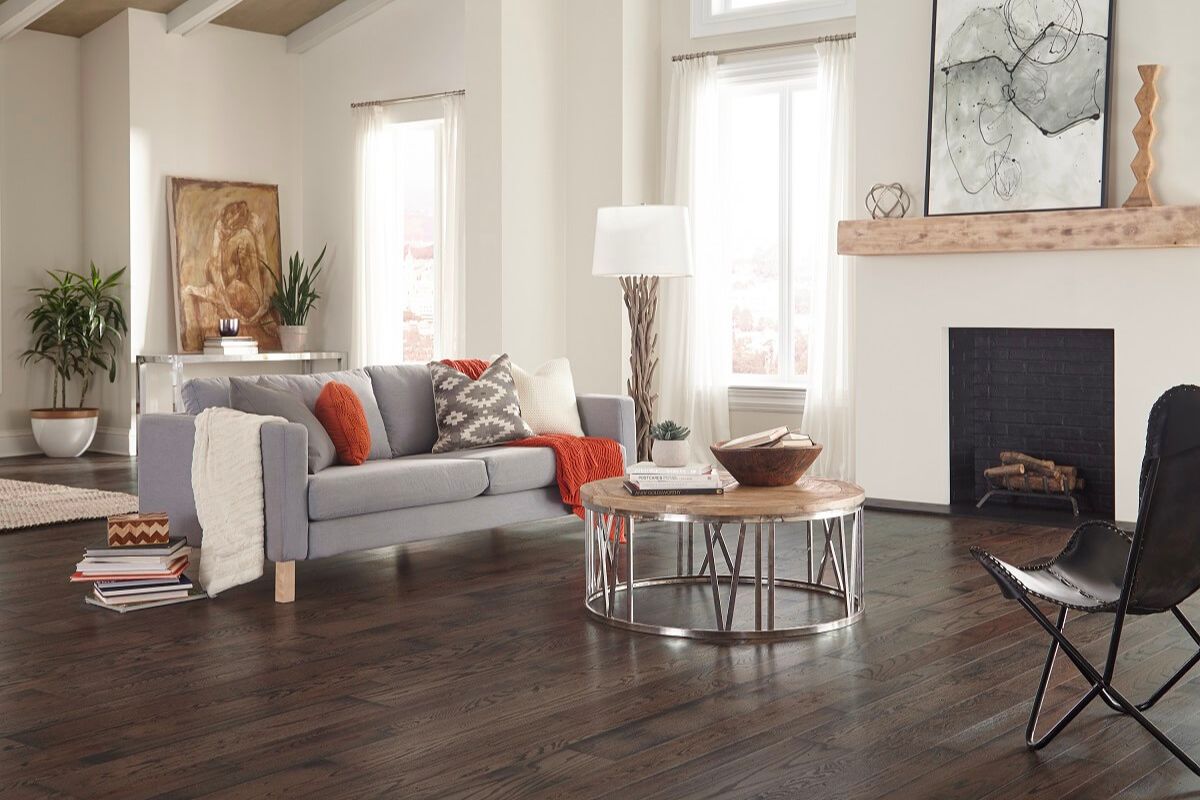
What is solid hardwood flooring, how is it made, and is it right for your Toronto home? A clear guide to construction, species, refinishing, and how it compares to engineered wood.
Solid hardwood flooring is one of the most timeless investments you can make in a home. Milled from a single, solid piece of natural wood, it brings warmth, character, and lasting value to any room. For many Toronto and GTA homeowners, it is the floor they picture when they imagine a truly finished space.
But "solid hardwood" is often confused with engineered wood, laminate, and vinyl that merely look like wood. This guide explains exactly what solid hardwood flooring is, how it is made, where it works best, and how to decide whether it is the right choice for your home and Toronto's climate.
What Solid Hardwood Flooring Actually Is
Solid hardwood flooring is made from planks cut from a single piece of natural timber, typically between 18 and 20 millimetres thick. There is no plywood core and no layered construction. What you see on the surface is the same wood all the way through the board.
That solid, one-piece construction is what sets it apart from engineered hardwood, which bonds a real-wood top layer to a plywood or high-density core. Because a solid plank is wood through and through, it can be sanded and refinished many times over its life. This is the single biggest reason homeowners choose it: a well-maintained solid hardwood floor can last for generations.
Each plank is milled with a tongue-and-groove profile so the boards lock together tightly during installation. Boards come either pre-finished from the factory or unfinished for site finishing after they are laid.
Popular Wood Species and What "Grade" Means
The species you choose affects the colour, hardness, and grain of your floor. In Canada, native hardwoods are especially popular for their durability and availability.
- Red oak — warm reddish tones, prominent grain, and excellent durability; a Canadian classic.
- White oak — slightly harder than red oak with cooler, more neutral tones that suit modern interiors.
- Maple — very hard and pale, with a subtle, clean grain.
- Hickory — one of the hardest domestic species, with dramatic grain variation.
- Walnut — softer but prized for its rich, dark chocolate colour.
Beyond species, wood is sorted by grade, which describes how clean and uniform the boards are. A higher "select and better" grade shows consistent colour with only small mineral streaks and minor character marks, while more rustic grades show more knots, colour variation, and natural character. Neither is "better" in quality terms — it is a matter of the look you want. You can explore species and grades in our hardwood flooring services.
The Advantages of Solid Hardwood
Solid hardwood earns its reputation for a handful of genuine, practical reasons.
- It can be refinished repeatedly. Scratches, dents, and dated stains can be sanded away, so the floor is renewable rather than disposable.
- It lasts for decades. With reasonable care, solid hardwood routinely outlives most other flooring types and often the renovations around it.
- It adds real estate value. Buyers in the GTA consistently rank hardwood among the most desirable features in a home.
- It is authentic. Every board is genuine wood with a unique grain — no printed photographic layer, as you find in laminate or vinyl.
For a fuller cost picture, see our guide to hardwood floor installation cost in Toronto.
The Trade-offs to Understand
Solid hardwood is not the right answer for every room, and being honest about its limits helps you plan well.
Its main weakness is sensitivity to moisture and humidity swings. Natural wood expands when the air is humid and contracts when it is dry, which can cause gaps in winter or cupping in damp conditions. That movement is why solid hardwood is generally not recommended for bathrooms, laundry rooms, or over concrete slabs below grade.
Solid planks also usually need to be nailed or stapled to a wood subfloor, which makes them less flexible for certain condo and basement installations. In those settings, engineered wood is often the smarter choice. Our guide to engineered hardwood for your Toronto home explains when a layered construction makes more sense.
Solid Hardwood in Toronto's Climate
Toronto's climate is demanding on natural wood. Humid summers and dry, heated winters create a wide seasonal swing in indoor humidity, and solid hardwood responds to every bit of it.
The good news is that these movements are normal and manageable. Proper acclimatization — letting the wood adjust to your home before installation — plus a controlled indoor humidity level of roughly 35 to 55 percent keeps seasonal gapping to a minimum. A humidifier in winter and good ventilation in summer go a long way.
Subfloor preparation matters just as much. A flat, dry, structurally sound subfloor is essential for a solid floor that stays quiet and stable for decades. This is where professional installation pays for itself, because moisture testing and proper fastening prevent the problems that cause floors to fail. Browse the local options and projects on our Toronto flooring page.
How Solid Hardwood Is Installed
Solid hardwood is most commonly installed by nailing or stapling the boards down to a wood subfloor. Over a concrete subfloor, a plywood layer is usually added first, or a glue-down method is used with the right adhesive and moisture barrier.
A typical installation follows a clear sequence: the wood acclimatizes in the home, the subfloor is checked and prepared, a moisture barrier is laid where needed, and the boards are fastened row by row with careful attention to expansion gaps at the walls. Unfinished floors are then sanded and finished on site; pre-finished floors are ready to walk on right away.
Because so much depends on subfloor condition and fastening, this is not a forgiving DIY project. Poor prep or the wrong fasteners lead to squeaks, gaps, and movement that are expensive to correct later.
Frequently Asked Questions
How long does solid hardwood flooring last? With reasonable care, solid hardwood can last 50 years or more, and often far longer. Because it can be sanded and refinished multiple times, the same floor can be renewed several times over its life rather than replaced.
Can solid hardwood be installed in a basement or bathroom? It is not recommended. Basements below grade and moisture-prone rooms expose the wood to humidity and water that cause cupping and gapping. Waterproof options like SPC or tile are far better suited to those spaces.
Is solid hardwood better than engineered hardwood? Neither is universally better — they suit different situations. Solid excels in main living areas over wood subfloors and can be refinished more times, while engineered handles humidity and concrete subfloors better. The right pick depends on the room and your home.
How many times can solid hardwood be refinished? A quality solid floor can typically be sanded and refinished several times over its lifetime, depending on the board thickness and how much material is removed each time. This is a key advantage over engineered and other flooring types.
Does solid hardwood add value to my home? Yes. Hardwood is consistently one of the most sought-after features for GTA buyers, and a well-maintained solid floor is often seen as a premium, move-in-ready finish that supports resale value.
Choosing Solid Hardwood with FloorSure
Solid hardwood flooring remains a benchmark for beauty and longevity, and for the right room it is hard to beat. The key is matching the material to your space, preparing the subfloor properly, and controlling humidity so the floor performs for decades.
FloorSure is a fully insured, WSIB-covered flooring specialist serving Toronto and the GTA, and every installation is backed by our 1-year workmanship warranty. If you are weighing solid hardwood for your home, explore our hardwood flooring services or call or message us on WhatsApp at +1 (437) 988-0524 for a free, no-pressure assessment of your space.
FloorSure is a fully insured, WSIB-covered flooring & stair installer serving Toronto & the GTA, with a 1-year workmanship warranty on every installation. Call or WhatsApp +1 (437) 988-0524 for a free on-site quote.